
By: Amanda Guarragi
What exactly is history? Is it stories passed down from generation to generation, or what is placed in textbooks across the globe for children to be conditioned to one particular narrative? For years, people have addressed the broken system in America for it to be compared to other countries. In her film Origin, writer-director Ava DuVernay educates audiences on the hierarchy of human division. The film is adapted from the novel written by Isabel Wilkerson called Caste: The Origins of Our Discontents. This novel explores racism in the United States as an aspect of a caste system. Isabel Wilkerson reconstructed the perspective of what has divided people within her country by researching the divisions in others. Throughout history, people have been divided since birth based on what has been passed down from previous generations. But it doesn’t inherently come down to racism.
DuVernay mirrored the structure in Wilkerson’s book by setting up the pillars of caste with Wilkerson’s journey. Wilkerson (Aunjanue Ellis-Taylor) was a journalist, and she had already completed one novel. She wanted to write another one but did not know where to start. Life can be calm and peaceful, and then everything can come crumbling down at once. For Wilkerson, her journey began with the murder of Trayvon Martin. Wilkerson could not wrap her head around it, and she questioned the system even more. What exactly is the difference between the people in America? Why is there this division in the first place? Wilkerson continued to research the division in Nazi Germany and the caste system in India to conclude that it’s not just race. There are categories enforced in these systems to divide people.
Wilkerson’s “Pillars of Caste” are as follows:
- Divine Will
- Heritability
- Endogamy
- Purity and Pollution
- Occupational Hierarchy
- Dehumanization
- Terror and Cruelty
- Inherent Superiority and Inferiority
As Wilkerson goes through the American system, Nazi Germany and the Indian caste system, she finds that they are all similar. These pillars are all blatantly embedded in the broken system of the United States. The belief that there should be one dominant caste within the country that would be considered pure is barbaric. No one is more deserving than the other, nor should they be oppressed based on their placement in the caste. The prohibition of interracial marriage was a massive issue in the United States, which led to civil rights lawsuits within counties. Even in Germany, Germans were not allowed to marry Jewish, and vice versa. It is a system of conditioning that many were born into. The generational cycle of trauma, dehumanization and terror has not ended for those in America. The continuous brutality against Black Americans is unfathomable because cruelty has just been restructured and reeks of generational conditioning.
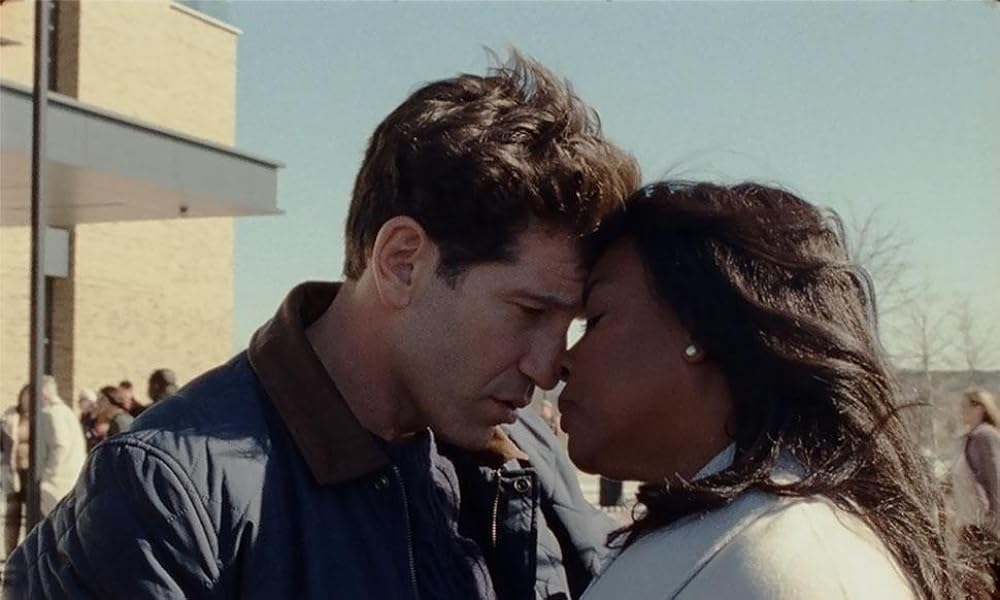
DuVernay does not only address these issues quite expertly. She integrates Wilkerson’s life as she navigates her place in the world. After suddenly losing her husband, mother, and favourite cousin, she felt like her roots were slipping away. The life she had created for herself was possible because of her hardworking mother, who had endured her fair share of hardships. Her family meant the world to her. Her cousin Mary (Niecy Nash) was her best friend. The family was welcoming to her husband, Brett (Jon Bernthal), who was a mathematician and lived across the street from her. She lost her connection to the ground she walked on because her life had changed drastically. Wilkerson wanted to understand how everything began and why the divide caused many issues. DuVernay captures the beauty within the sadness and how each relationship affected her perspective on what she was researching for her novel.
Aunjanue Ellis-Taylor delivers one of the strongest performances of the year. She was poised, headstrong and often soft-spoken. She was eager to learn about other systems while challenging others during those discussions. DuVernay showed the importance of having healthy conversations about difficult subjects. Even if others disagree, there still needs to be that perspective to counter it. Origin is some of DuVernay’s best work, as she uses the framework of Wilkerson’s novel to connect stories from different groupings who have been treated as less than human. That is why the title has more than one meaning, and while watching, you realize how layered the caste system is. It’s the origin of Wilkerson’s life, the origin of the caste system, the origin of societal conditioning, and ultimately the origin of hatred. This one system has been reworked to fit the ideology of those in power, and unfortunately, the system can only be broken if it is destroyed from the inside out.
 Candid Cinema