
By: Amanda Guarragi
The one universal experience that is difficult to explore is grief. Over time, people have experienced an immense sense of loss and have found solace in certain mediums. Fortunately, the human experience can be presented through films most delicately and effectively. Some films build a story around a grieving character while not having it directly affect them, but slowly build until the wave overtakes them. These characters can teach audiences that there is always space to express these emotions. To sit with them and have them flow through you no matter how difficult. Most human stories can dramatized in fantasy while still grounding the one particular pain of grieving. In Andrew Haigh’s All Of Us Strangers, he crafts a beautiful narrative that flows in and out of Adam’s (Andrew Scott) consciousness to connect him with his late parents and his new friend Harry (Paul Mescal). Adam is a screenwriter, and the stories that flow freely in his head lead to creating scenes that he never shared with his parents. Haigh takes daydreaming to new lengths as he explores grief not only through physical loss but also moments that were vital in shaping Adam’s soul.
The film is loosely adapted from Taichi Yamada’s Strangers. Haigh wanted to incorporate the ghost story uniquely, and he did so by having Adam as his living character. Adam is drawn back to his childhood home through his writing. He’s apprehensive about entering a relationship with a handsome stranger who lives in his building. The more he gets to know Harry, the more he opens up to his parents, who had died in a car crash thirty years before. Due to the loss of his parents, Adam had a different upbringing with his grandmother and had a hard time exploring his sexuality. We learn that he kept to himself and was a very reserved child. Adam had grown with the idea of closing himself to the potential of love out of fear that he might lose them. Harry chips away at his tough exterior and allows Adam to explore a different side of himself that he had been hiding for a long time. Not only from himself but from his parents as well. There are crucial moments that children need to have with their parents, and coming out is one of them. There’s the liberation of living in your truth and the hopefulness that parents will unconditionally love and accept you.
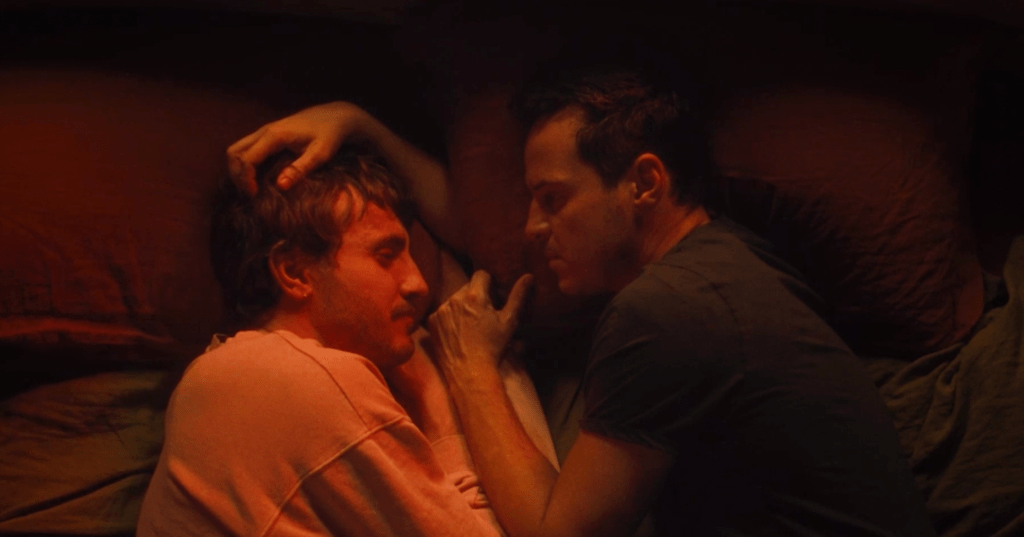
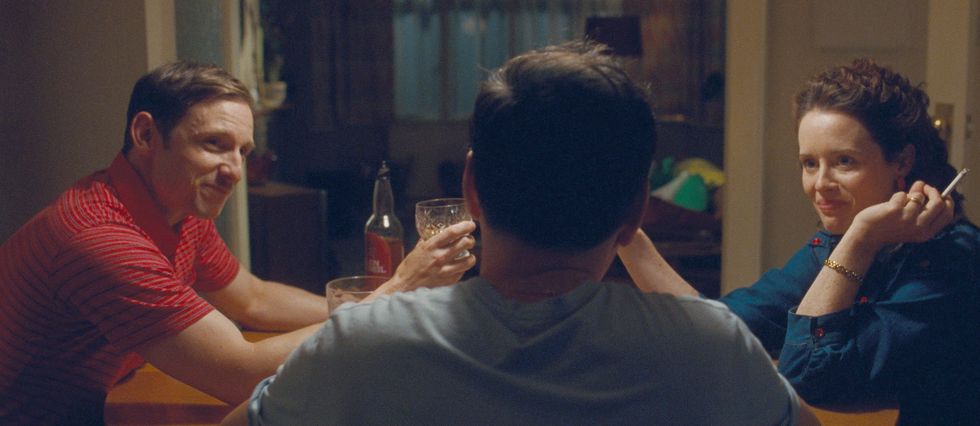
Andrew Scott’s performance is tender and vulnerable. This is some of Scott’s best work because of the emotional depth he brought to the role. The deeper Haigh went into Adam’s past, the more raw Scott’s performance became. It does feel like a second chance of a fantasy when Haigh creates a dreamlike atmosphere for Adam. He returns to the safety of his childhood home, the kitchen table where serious conversations should have been had, and the one night he stayed in his parent’s bed that eventually altered the trajectory of his life forever. These key set pieces were combined with fundamental moments that Adam should have had with his parents. Jamie Bell and Claire Foy beautifully portrayed Adam’s parents. The two of them act as if no time has passed between them. They share intimate moments that helped Adam navigate his grief until it seems like they were holding Adam back from moving forward through life without them. Anyone who has passed on is never truly gone, and even after thirty years of not having his parents, Adam still felt that emptiness, that feeling of not being whole. When trying to experience joy with Harry, his mind would still go back to what his parents would think of this union. Not in an ashamed manner, but yearning for that connection that would never be.
While watching this film, I could only think of the connection with my parents. Adam was an only child; he and I share that same bond. Speaking from experience, you become dependent on always having your parents around. The older you get, the closer you become, and the dynamic is not only biological but there’s love found in an evolving friendship. It is always just the three of you, taking on the world together and feeling safe no matter what. Adam felt comfortable sharing everything with his parents. Especially in the moments that he didn’t get the chance to have. Haigh and cinematographer Jamie Ramsey often had a symmetry of three in the scenes shared between them. It made me incredibly emotional because of the connection I have with my parents, and to ever think I’d be without them one day is heartbreaking. I was fortunate enough to have those stepping-stone moments with them, but to watch Adam finally get to have those important conversations was so fulfilling. To Adam, they felt so real that he started to lose touch with reality. And Harry was the one who brought him back to his apartment building. And have him remember to live presently and not forget to live for himself.
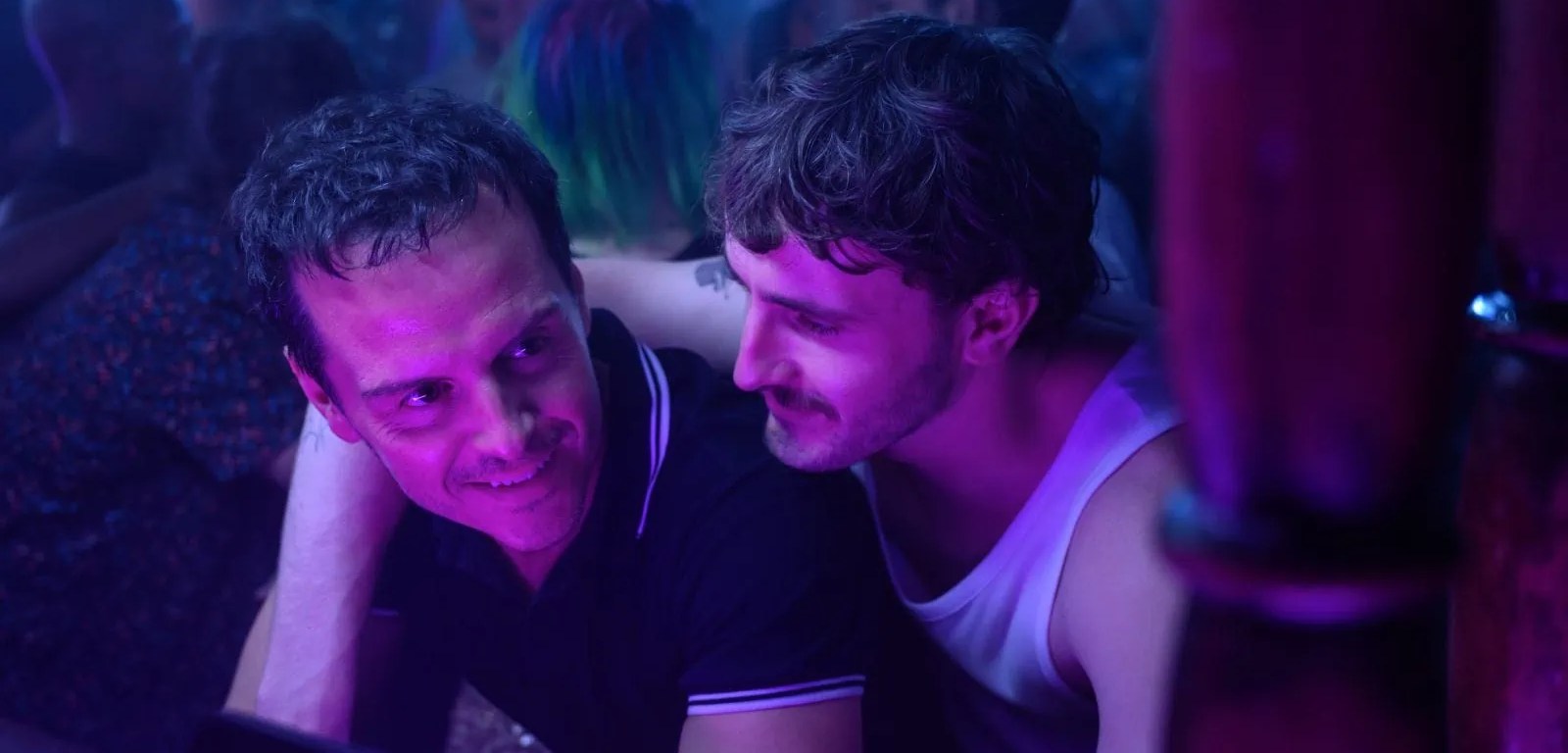
The final thirty minutes of All Of Us Strangers has stayed with me because of Adam’s journey in his apartment building. When we first meet Harry, he’s intoxicated and has a bottle in his hand. Adam questions whether or not to let this handsome stranger in because he doesn’t know him. Once he does let him in, their relationship flourishes, and they open up to one another. Adam opens the door to Harry, which symbolizes opening his heart to someone, but he doesn’t know how to balance the pain of his past and his newfound love. Mescal takes your breath away in this film, and Scott’s shyness compliments Mescal’s confidence. Their chemistry is natural and so loving. Once Adam realizes that he needs to let go of his past and work through his grief more realistically, he notices that he doesn’t know Harry at all and they are strangers. The final moments of the film are left up to interpretation. Haigh wanted to explore Adam’s grief in a layered fantasy, and eventually, his fear came to light. It’s possible that people can get stuck in their past, and once they’re ready to move forward, it may be too late. The beauty of this film lies in the most natural conversations that many people take for granted.
 Candid Cinema
One thought on “‘All Of Us Strangers’ Review”