
By: Amanda Guarragi
Five years ago, Todd Phillips released Joker on October 4th and won the Golden Lion at the Venice Film Festival in 2019. It went on to be nominated for 11 Academy Awards and win two Oscars; one for the brilliant score composed by Hildur Guðnadóttir and the other for Joaquin Phoenix’s transformative performance. You could say that this DC “Elseworlds” comic book film overperformed that year, and it did.
Not only was it critically acclaimed, but Joker also became the highest-grossing rated-R comic book film, surpassing Deadpool. Joker by no means had a perfect run, many people called it a Martin Scorsese knock-off or that the film was empty with its messaging for mental health. Whether you were a fan of the first or not, there’s no way to be prepared for the swift quality decline of its sequel, Joker: Folie á Deux.
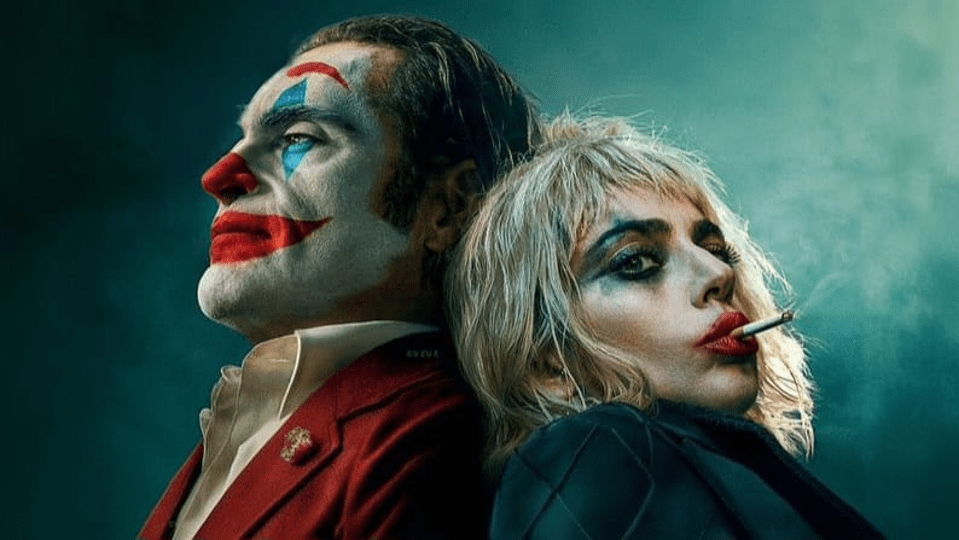
This sequel begins right after Arthur Fleck (Phoenix) is put in jail for murdering six people, including Murray Franklin (Robert De Niro). While Fleck is in prison, he doesn’t make as many jokes anymore, and the security guards tease him because he has gone mute. It wasn’t until Fleck was brought to a different ward where music therapy helped certain inmates. Due to Fleck’s good behaviour while his lawyer helps cut down his sentence through a trial, Fleck becomes interested in musicals. Phillips ties the performative nature of musical theatre with Fleck’s fantasy world to sift between his bleak reality and the character of “Joker” he plays in his head.
His lawyer, Maryanne Stewart (Catherine Keener), attempts to sell the idea that Arthur Fleck has a split personality disorder. He becomes the Joker when he’s in distress, which is the entire exploration of the first film. Phillips decides to deconstruct everything he built in the first film for the character of Arthur Fleck and claim that he isn’t truly the “Joker.” This entirely defeats the purpose of using the character because there’s no relation to the comic book character. The first film is compelling because Phillips builds to this final moment where Fleck embraces this other persona. This also gave comic book audiences one of the best final moments on film.
Joker: Folie á Deux doesn’t know whether to lean on a dramatic procedural or a full-blown musical. So there’s no balance for either of them. Serious moments with Fleck in the courtroom discussing his childhood trauma and what triggers him were undercut with a fantasy world of song-and-dance that wasn’t effective. Creating a jukebox musical for a comic book film is ambitious, considering their demographic would probably not voluntarily watch a musical themselves.
The issue with the film was the songs chosen for the musical numbers. Even with a jukebox musical, the songs are an added form of expression for the characters. None of the songs were impactful or effective. The editing also harmed the musical numbers because they seemed to have just ended whenever Fleck needed to return to his reality. There is a polished and less jarring way to do this.
Furthermore, the brilliance of Guðnadóttir’s score was stripped away with atrocious sound mixing. The score and songs weren’t seamlessly mixed to flow into each other whenever the next song began. It felt disorienting because of everything that was going on. Phillips had no idea where he wanted to go with this sequel, and it showed. Does the film look gorgeous because of the director of photography, Lawrence Sher? Yes. But a film looking pretty is not enough to get through the dullness of its script.
The saving grace of the film is the performances by Phoenix and Gaga, who fully commit to the musical aspects and the fantasy elements. In the beginning, Phillips implies that the Joker has his shadow, but with his split personality, the audience doesn’t know to what extent. To say everything is oversimplified and on the nose is an understatement.
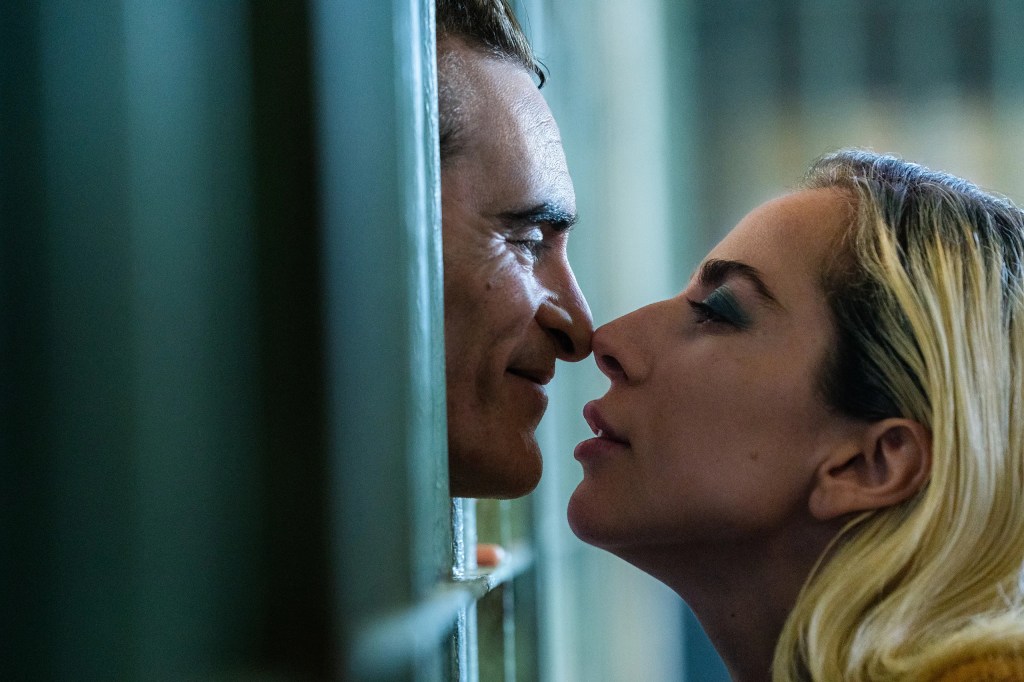
There’s also nothing much to say about Gaga’s performance as Lee because most of her scenes were cut. Gaga was hired to unlearn how to sing and sit in a courtroom while Phoenix danced around and put on a show. It’s upsetting to see her so underutilized here because there were plenty of scenes where she shined. Gaga was more subtle in this role and felt more grounded than her other performances. Gaga and Phoenix had chemistry, but it was also awkward between them.
Phillips had no sense of direction when building their relationship because of how rushed it was. It didn’t feel like a “love-at-first-sight” romance, as implied, but rather an observational relationship, seeing which one will out-match the other.
So, to those who have been saying the people who disliked it didn’t understand the movie, we have all been explaining why it didn’t work for us. It’s not a film that is difficult to understand, especially when the same point is being reiterated constantly in the second half of the film. If Arthur Fleck isn’t labelled as the “Joker,” then there wouldn’t be an issue with the digression of the infamous Clown Prince of Crime.
Hidden in this film is an interesting procedural courtroom drama that would have worked well without the musical. A jukebox musical should not have been this dull or uninteresting, especially because the performances make it watchable. Unfortunately, Joker: Folie á Deux feels like a film that didn’t need to be made because this project has no passion behind the camera.
The character development for Arthur Fleck didn’t move past the first film. Phillips didn’t even try to push him further. Instead, Phillips destroyed the performative character of the Joker to prove no one cared about Fleck. Phillips failed to understand that there is no Arthur Fleck without Joker and no Joker without Arthur Fleck.
 Candid Cinema