
By: Amanda Guarragi
The Catholic Church has been one of the most influential institutions for centuries. An institution such as this one often has traditional ideologies underlying systemic cycles. People frequently turn to their faith to find solace when facing hardships. Unfortunately, no one knows what goes on behind the doors of the Vatican. But to say there isn’t any form of corruption within the institution means one is in denial.
The issue with blindly having faith is that no one questions the higher power or those speaking on their behalf. There are human rights issues that the Catholic Church is still actively fighting against, but it preaches that we are all God’s children.
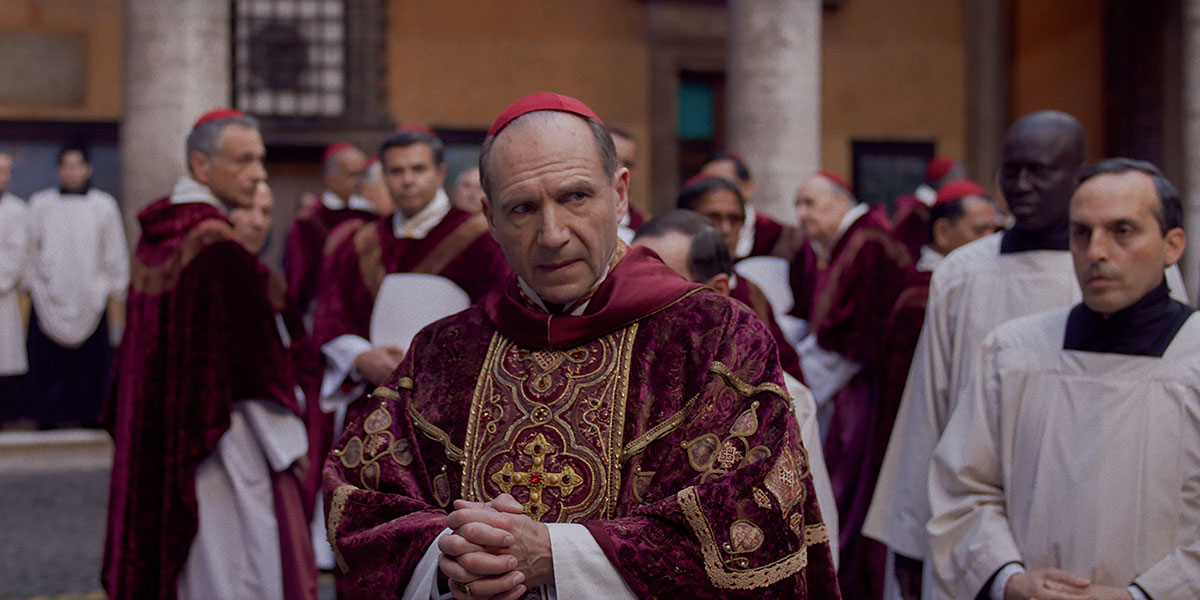
In Edward Berger’s Conclave, the exploration of choosing a new Pope is fascinating because of the conspiracy uncovered by Cardinal Lawrence (Ralph Fiennes). While tasked with searching for a proper candidate, he finds a web of lies that could shake the very foundation of the Church.
The film is adapted from Robert Harris’ novel of the same name and highlights the ambition of men within the conclave. On paper, searching for a new pope does not sound compelling, and if you’re not someone who cares about religious politics, this does not sound appealing.
However, it all comes down to the execution.
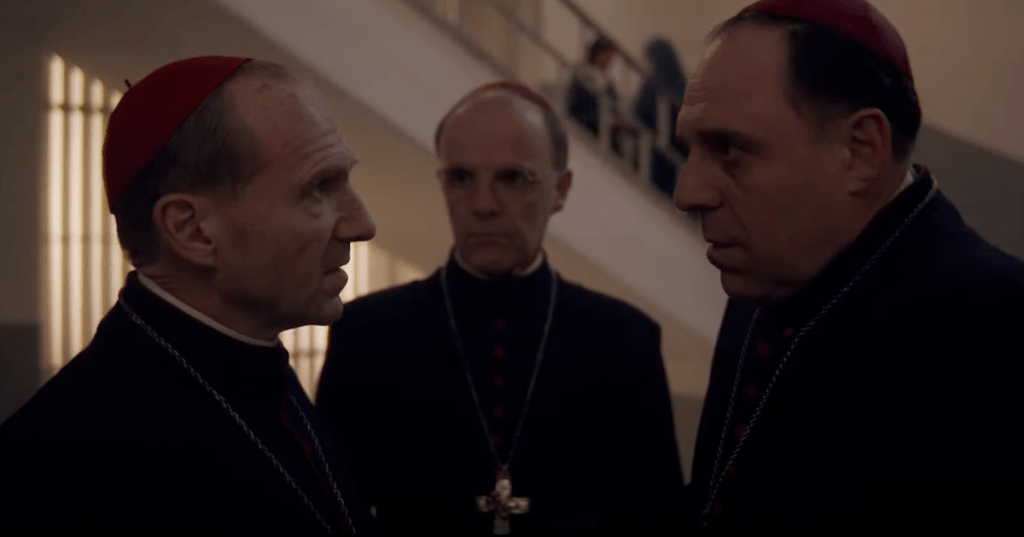
Berger (All Quiet on the Western Front) tediously set the atmosphere after the Pope’s death. No one has ever been inside the Pope’s quarters, and Berger meticulously placed important details in every corner.
The opulent production design by Suzie Davis captured the excessiveness of the Catholic Church and centuries of religious hierarchy. The production design, combined with the cinematography by Stephane Fontaine, set the looming decision that needed to be made.
Fontaine and Berger worked wonderfully together. The cinematography sets the tone of deceit and creates an unsettling undertone throughout. The lighting was utilized effectively when contrasting whom to trust within the conclave. Volker Bertelmann’s striking score fluidly entered when new information was discovered. The score amplified all these components, including the screenplay by Peter Straughan with one of Fiennes’ best performances.
Unexpectedly, the film unravels as a procedural, with Cardinal Lawrence doing his best to elect someone worthy of the Papacy. The manipulation among the conclave of Cardinals and secrets is entertaining and sometimes laughable with what is uncovered.
The discussions about the direction of the Catholic Church and the other Cardinals between Cardinals Bellini (Stanley Tucci), Tremblay (John Lithgow), Adeyemi (Lucian Msamati), and Tedesco (Sergio Castellitto) are relevant and necessary. It’s not meant to be comedic at any point, but there are absurd conversations and moments – shout out to Sister Agnes (Isabella Rossellini) – that make this film engaging.
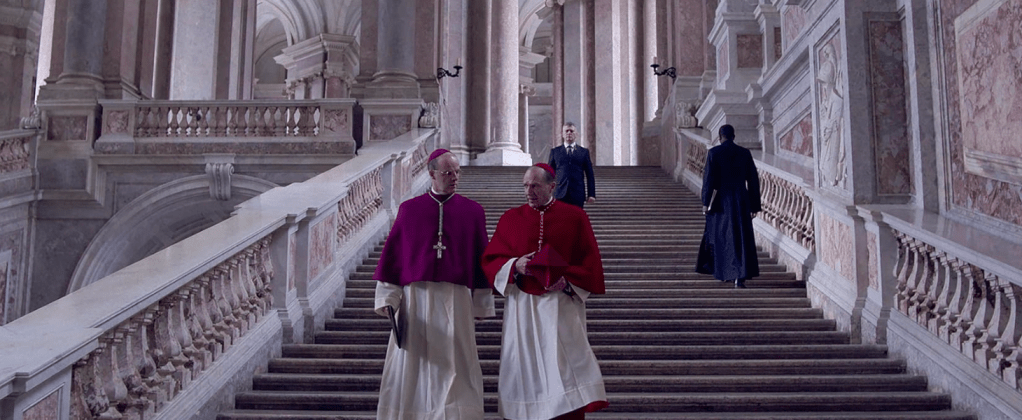
Berger slowly builds a web of lies highlighting each Cardinal and their decisions throughout their lifetime in the Church. The supporting cast strengthens the performance of Ralph Fiennes, but they don’t necessarily stand out. The ensemble works together well and has its moments.
Once Cardinal Benitez (Carlos Diehz) joins the other Cardinals, his worldview is entirely different. Cardinal Lawrence is intrigued by his mind and wants him to share his ideas. Lawrence wants a new, better direction for the Church; this can only happen with change from the inside.
In Conclave, Berger visually shows that Cardinal Benitez is this angel and guiding light toward the end. There is destruction around them, and they feel unprotected. Once the decision is made, Cardinal Lawrence feels relieved. The way the film ends can be seen as controversial, but in context, it is a twist entirely necessary to challenge the views of the Catholic Church.
It’s a gripping journey with these Cardinals, especially with what’s uncovered, but the final discussion ties everything beautifully together. While watching, you can see the contradictions within the Catholic Church and the values they instill in their community. Berger and Straughan crafted an enticing procedural that provokes discussions long after the film is done.
 Candid Cinema
3 thoughts on “TIFF ’24: ‘Conclave’ Review”