

By: Amanda Guarragi

The Palm d’Or-winning film, It Was Just An Accident, has Jafar Panahi working on another level. It is brilliant as he anchors the weight of past trauma while tastefully delivering humorous dialogue among the group who suffered at the hands of Iranian authorities. The way the journey unfolds for this group is unpredictable, which leads to one of the most powerful endings in recent years.
It starts with a swift act of vengeance when Vahid (Vahid Mobasseri) recognizes his former tormentor, Eghbal (Ebrahim Azizi), whom they had nicknamed Peg Leg. After Eghbal leaves Vahid’s auto shop, Vahid decides to stalk him the next day and kidnap him. The key to the dark humour flowing effortlessly while being reminiscent of the hardships these prisoners faced is that Vahid is unsure of Eghbal being the tormentor.
Each character to whom Vahid reveals the possible identity has their own stance on what they should do with him. The chain of events that follows leads to a climactic finale when they confirm that it is, in fact, their tormentor. Panahi builds tension and anticipation with the most impactful confrontation.
Cinematographer Amin Jafari and Panahi consistently compose the frame to show the subtlety of the characters’ defiance. The lighting was a massive factor in the third act, and Jafari utilized the dark of night, elevating the palette with steely blues combined with bright reds, showing evil will follow no matter where you turn.
For Panahi to craft a film this extraordinary from the pain he and many others have endured is pure artistry. The delicacy of channelling that rage, anguish and pain through shared life experience and dry humour was the perfect balance to explore this poignant narrative. It Was Just An Accident is unlike any film you’ll watch this year. Panahi expresses the full spectrum of human emotion while tending to emotional wounds that have been repressed for years.
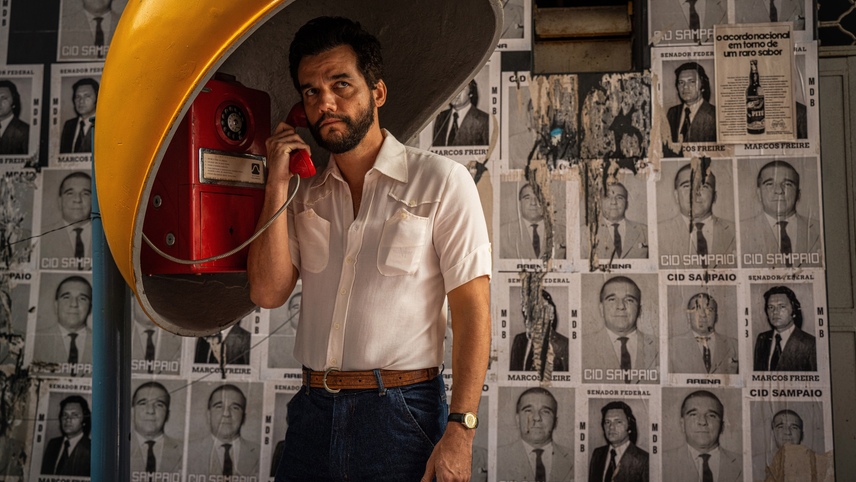
In Kleber Mendonça Filho’s The Secret Agent, Wagner Moura delivers one of the best performances of his career. He portrays a technology expert named Marcelo (Armando) who returns during Carnaval to reunite with his son.
When he returns, Brazil’s repressive military regime has him under intense watch. Unfortunately, there are stories of civilians who have experienced corruption at the hands of the Brazilian government and have been part of the political turmoil within the system.
There are strong moments for Moura throughout the film, but ultimately, the pacing is the issue with how the narrative unfolds. Armando desperately wants to move away with his son and remain unscathed, as the government is there to question his past decisions and his documentation.
Filho explores the repercussions of speaking out against authority figures in Brazil because they’re all interconnected. To secure his safety, Armando uses the alias Marcelo and is sheltered by Dona Sebastiana (Tânia Maria), who has invited other political refugees into hiding.
The Secret Agent is an intricate story that interweaves Armando’s troubled past as a teacher and explores the generational lineage of political distress. In moments, Filho explores the corruption through subtlety, but overall, some aspects are too direct in showing the underlying issues. It didn’t feel as seamlessly integrated, and he attempted to incorporate too much into the narrative.

Sirât is an exploration of life and death through the lens of ravers in Morocco. Director Óliver Laxe and co-writer Santiago Fillol take their characters on a journey through the desert as Luis (Sergi López) and Esteban (Bruno Núñez Arjona) search for their lost daughter.
As Luis and Esteban pass flyers to the ravers, they discover that their daughter could be at another rave in a few days. So they tag along with the group that gave them the information.
The focus is more on the music as Laxe places massive speakers on the ground in the desert. The sound design is incredible, enhancing the journey through the desert. It became the pulse of the film, and without the music, the silences are deafening because of the predicament they’re in.
These ravers move from one to the next and take risks because life is too short in their eyes. They’ve experienced hardships and developed their family. They’ve escaped military control and evaded being trapped in a system that would work against them. Raving to them is freedom, equating art to freedom of expression; a lifeline for people to hold onto during difficult times.
Once tragedy strikes Luis, his perspective on life changes drastically. The universe has bigger plans, and Luis believes in fate. The journey he went on to find his daughter was written in the stars, and life will change in an instant; it’s about how you adapt to the changes. Laxe and Fillol express that life can be tragic, but it’s worth taking a risk even though we do die in the end.
Sirât unfolds in an unpredictably devastating downward spiral with an ending for all these characters. However, the development of the characters lacked depth, and there was no emotional connectivity to the group as a whole. It falls flat narratively because it’s aimless in the middle, but Laxe enforces that life is about the journey, and so is the film.
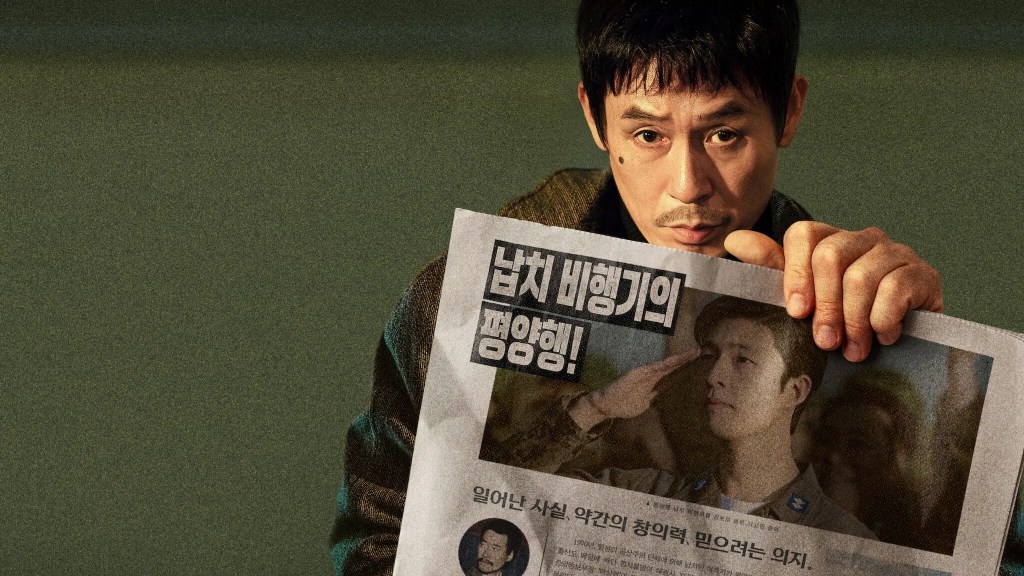
Good News is a fun political romp co-written and directed by Byun Sung-hyun. In 1970, a passenger plane leaving Tokyo’s Haneda Airport was hijacked by young members of the Red Army Faction. The hijacking exemplifies an analysis of chaotic governance and how countries operate.
The hijackers demand to be flown to Pyongyang, where they hope to be considered communist heroes because they want to fight against capitalism and imperialism. The biggest takeaway from this disaster black comedy film is the humour. They mock those in power while attempting to save hostages.
Sung-hyun has the characters operating on three different plains: ground control, air control, and the Korean Central Intelligence Agency. The chaos with everyone involved and no one knowing what to do next keeps the momentum. The action sequences are fun, adding a much-needed boost to the repetitive narrative.
Unfortunately, it does overstay its welcome because the humour runs stale with these characters. They remain in the same position for a long period, which becomes dull when it feels like the resolution is nowhere near.
Good News has a fun premise and a strong cast to deliver an action-packed dark comedy. It’s an interesting premise, and its humour is the saving grace for a tedious runtime. It has a satisfying ending and political satire that is most effective for the current climate.

Masterful director Park Chan-wook returns with a tragic tale of misfortune and desperation in No Other Choice. He takes the audience on a journey with a series of obstacles that challenge the working class, family dynamics and the fragility of the male ego.
This satirical black comedy thriller is based on the American novel The Ax by Donald Westlake. Yoo Man-su (Lee Byung-hun) is a decorated paper industry expert with 25 years of experience working at Solar Paper. However, once an American company plans to buy out Solar Paper, Yoo Man-su is among the thousands of others who are abruptly laid off.
Man-su has had a steady position for years and has been able to afford luxuries for his family. As a man, he won’t be able to fulfill his obligations to his kids and his wife, which toys with his mind. Being laid off hurts Man-su, and he begins to spiral. It takes him months to get back on his feet, and he finally finds a position in retail.
However, he wants his old position and applies for a job at Moon Paper, only to be humiliated by a younger line manager. Chan-wook cleverly places moments of despair for Man-su to build his desperation. The moment he sees the line manager out in the open, Man-su is floors above him, about to drop a pot on his head, but he stops himself.
Chan-wook poses the question: how far would you go out of desperation? No Other Choice turns into a targeted bloodbath with Man-su slowly picking off his competition for Moon Paper. The events that transpire are twisted and morally grey, but in some light, his actions are valid. Men face different societal norms than women, and there’s more of a toxicity surrounding their role in society.
No Other Choice is a fantastic exploration of a man’s ego and the lengths one would go to return to their normal life. People take the little things for granted, and there’s also an appreciation for the simple things.
It does take some dark turns, but Chan-wook’s direction for each scene and the composition of each frame is a joy to watch. Each murder Man-su committed was strategic to complement the competitor. Chan-wook and cinematographer Kim Woo-hyung composed such incredible imagery and experimented with certain shots to enhance the potency of the kill.
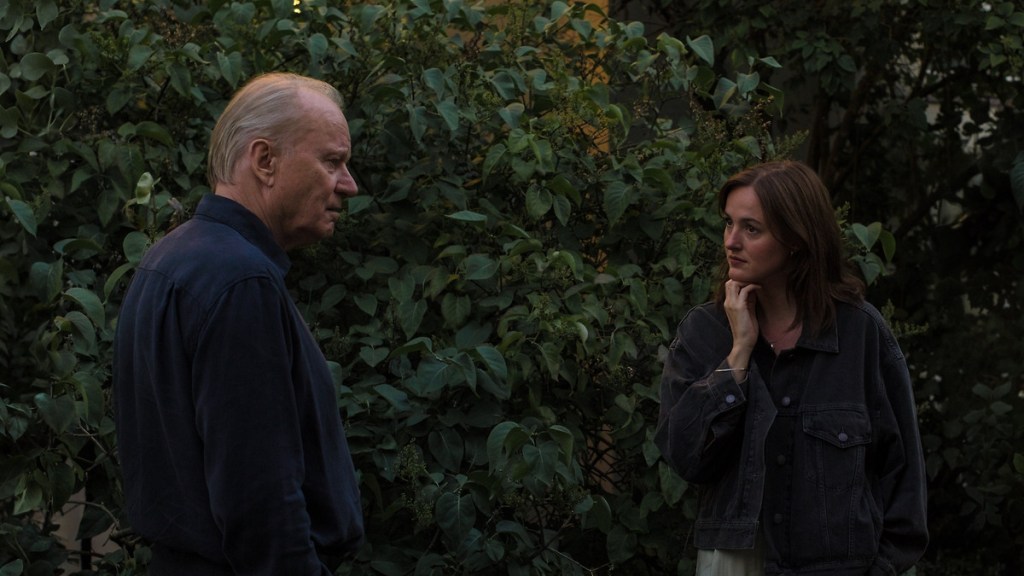
Joachim Trier’s Sentimental Value is a layered familial story about facing the past and acknowledging moments of pain that have shaped you. Trier’s decision to make their family home a character in itself, with cracks in the walls signifying the cracks within the family dynamic as well. The house may appear perfect on the outside, but if you get closer, you can hear the yelling and abusive behaviour they had endured.
Estranged sisters Nora (Renate Rensieve) and Agnes (Inga Ibsdotter Lilleaas) lived two different lives with their parents. After the death of their mother, Sissel, they are forced to confront their distant father Gustav (Stellan Skarsgard), who has always put his work above his family.
Similarly, Nora is an actress who prioritized her career over everything else, while her sister chose a secure job and a stable life, building a family. The sisters could not be more different, and Trier weaves their childhood experiences while reflecting on their relationship as sisters. Nora is the eldest and shielded her sister from how their father treated their mother. Nora, being more outspoken, stubborn, and combative (like her father), took the brunt of arguments away from Agnes.
Gustav seizes the opportunity to get closer to Nora after years of being away by casting her in an autobiographical film he has written. The film is about his mother, who took her own life in the family home in Norway. Even though Nora is a celebrated stage actor, Nora declines the opportunity to work with him. Gustav then chooses to work with a Hollywood actress, Rachel Kemp (Elle Fanning).
Rachel Kemp questions Gustav’s screenplay and his mother. She questions the childhood he had and why his own daughter didn’t take the role she’s now playing. Fanning acts as the audience, allowing both sides of the story to be heard. The viewer will understand all three perspectives due to the depth co-writers Trier and Eskil Vogt develop for these characters.
While Nora and Agnes begin going through pieces to sell in their family home, Trier offers a reflection on each object in the home. The sisters discuss which vase they remember or which blanket the mother used, questioning what exactly holds value and what’s sentimental to keep.
Trier’s profound exploration of grief and loss through objects adds complexity to what the sisters remember from their childhood. Selling the childhood home is sad, of course, but the house isn’t sentimental; it’s the people and memories inside that are carried long after it’s gone.
Sentimental Value is a cathartic and meditative exploration of generational trauma, facing it head-on and offering forgiveness. Rensieve, Skarsgard, Lilleaas and Fanning all give fantastic performances and truly feel the pain of these characters. Trier and Vogt’s choices to have Gustav show understanding towards Nora through his screenplay, which is more about her than his mother, was the connective tissue that brought the emotional weight needed to make an impact.
 Candid Cinema
2 thoughts on “TIFF ’25 Review Round-Up: International Features”