
By: Amanda Guarragi
There have been extraordinary writers over centuries whose work has been transcendent, and more importantly, lasting. The words of William Shakespeare influenced writers and playwrights to emulate his prose and modernize his writings. His comedies were clever, but the complexities of his characters in his tragedies offered depth and emotional resonance, even if his protagonists were deeply flawed.
Shakespeare wanted his audience to learn from his characters and assess the grey area of one’s moral code. Life is never simple; there are hardships, and never clarity when it comes to handling difficult situations.
In Hamnet, directed by Academy Award-winning Chloé Zhao, the story is centred on Agnes (Jessie Buckley), William Shakespeare’s (Paul Mescal) wife. It is adapted from the novel of the same name written by Maggie O’Farrell. The book explores the fictitious retelling of life before Shakespeare wrote Hamlet. Shakespeare had three children, Susanna (Bodhi Rae Breathnach), Judith (Olivia Lynes), and Hamnet (Jacobi Jupe). Judith and Hamnet are twins; they were inseparable, and Zhao strongly depicts their bond.
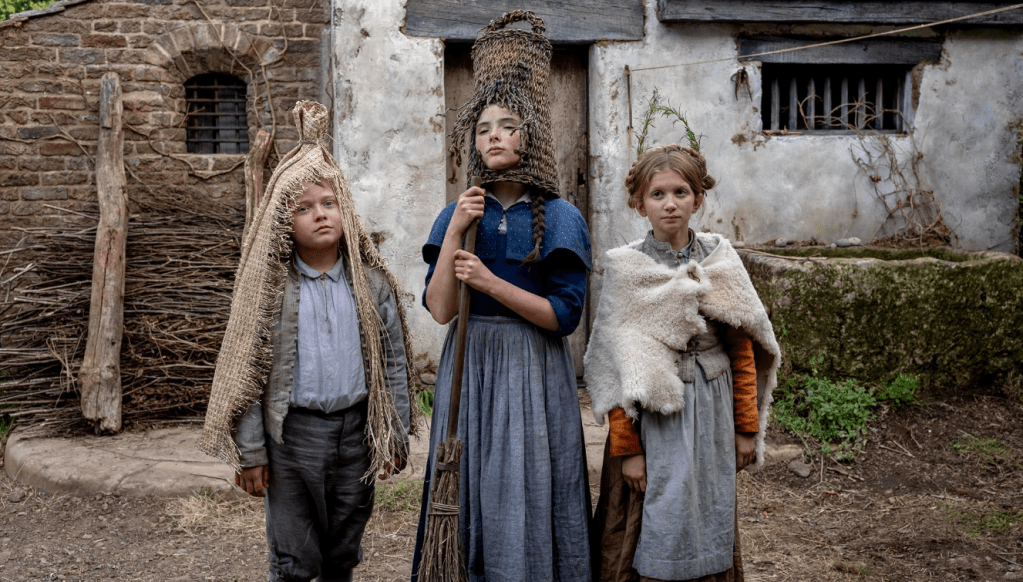
Zhao beautifully directs Hamnet through her signature humanistic lens that grounds the characters in the universe surrounding them. Agnes is one with nature and uses the forest as a form of escapism to enlighten herself and those around her.
The 1800s were bleak and troublesome for women who had a mind of their own. Agnes strays away from the societal norms and finds solace in the beauty around her. William and Agnes first meet in the forest, and their chemistry is undeniable. Jessie Buckley plays Agnes with such sincerity, while Paul Mescal plays William with openness and love for everything around him. As a writer, he finds the beauty in the unconventional and Agnes wasn’t like the other women around him.
Zhao instantly captured the love they shared through small moments between them. Agnes and William shared a fondness for experiencing the world through whatever means they could muster, and Zhao has a knack for creating something compelling from the mundanity of life. Much like Shakespeare, family issues are the foundation of most of his stories, as those are the most challenging aspects of life.
The main conflict for Agnes and William was his career and the fact that he had to work in London rather than stay with the family while Agnes was pregnant. The complexity of the characters led to resentment because of the distance and the inability to be present during vital moments.
William failed to be present during the twins’ birth, which foreshadowed that something tragic was bound to happen. The contrast between the birth of Susanna and the twins was stark and purposeful.
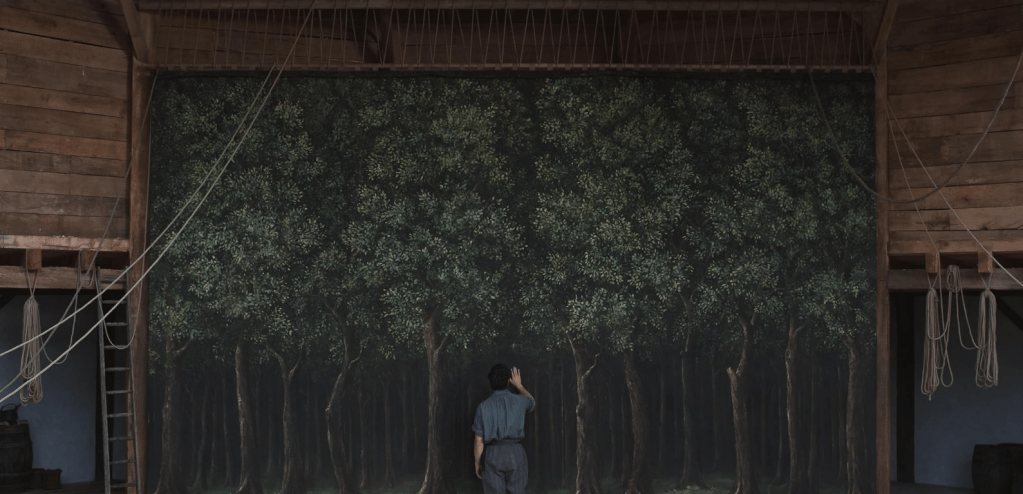
Cinematographer Lukasz Zal uses natural lighting to enhance the colours within the frame and show the contrast between both scenarios. There’s a richness in tone when Susanna is born with the close-ups and warmer tones of light. Juxtaposing with when the twins are born, where the steely blues are more prominent to show an underlying sense of dread. Zal grounds the film with Zhao, with the beauty of nature and the bleakness within the household when William is gone.
The children of William and Agnes then become the glue as a reminder that they’ve built something wonderful. Each child holds a part of them. Even though it was fairly linear, the bond between them and the love of their children immediately connected the audience to the family.
Mescal’s connection with Jupe was lovely and natural. William would tell him stories to re-enact, and Hamnet’s imagination would be expressed through becoming a knight and playing with swords. Their link through creativity is why Hamnet, as a character, emotionally resonates with everyone. It’s his eagerness to please his father as the man of the house when he isn’t there that’s so endearing, giving Jupe one of the most powerful moments of the year.
When William and Agnes suffer one of the greatest losses a parent could ever experience, they both handle their grief differently. Zhao lets the moment breathe in all its silence and vehement pain from Buckley. Buckley delivers one of her most devastating performances, and truly, the best of the year. Agnes’ grief is fuelled with anger, and the tragic moment happens in her arms as she attempts to save her son. The moment is replayed constantly when you see the pain in her eyes.
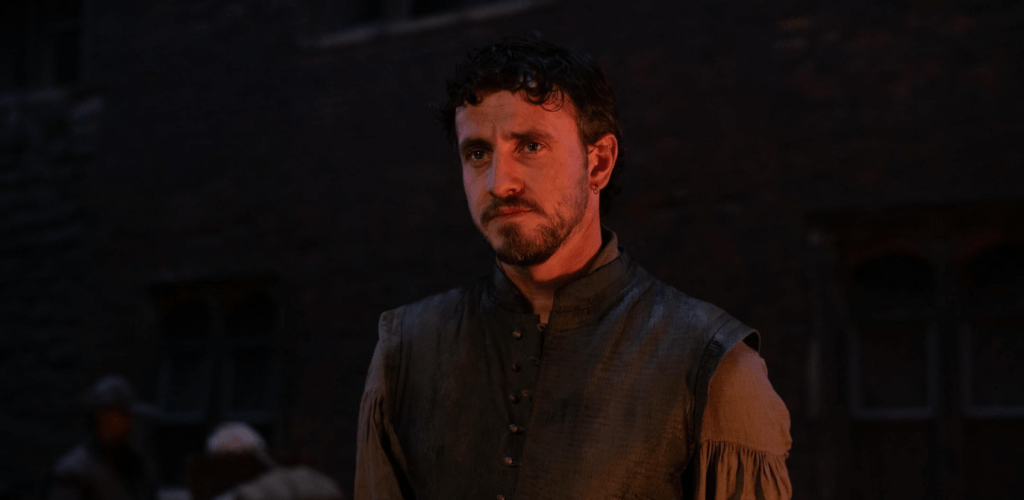
Contrarily, Mescal gives an internal and riveting performance during this period of grief because he does not outwardly express how he’s feeling. As all writers do, they hide away and express their loss through their writing, which leads William to create Hamlet. At this point, Agnes does not know the name William has made for himself or how he even began to process the loss of his only son.
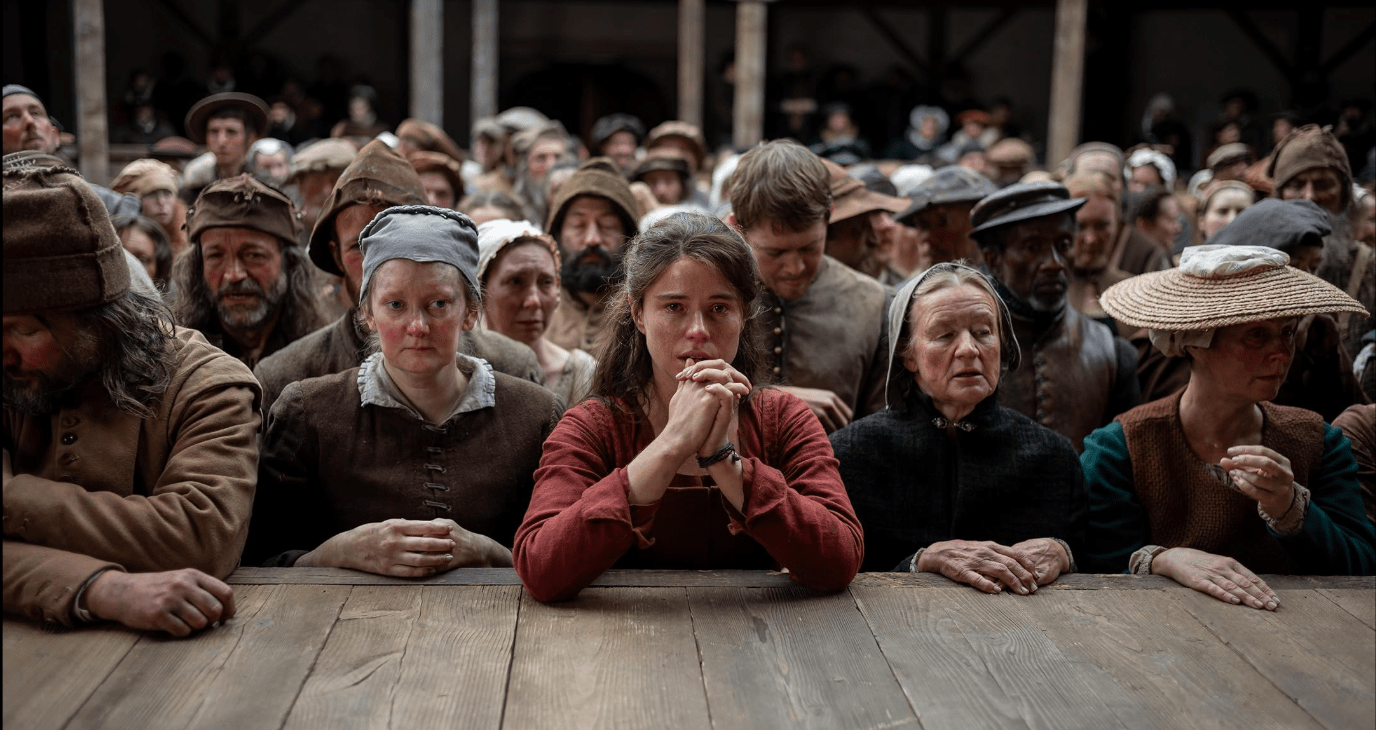
William invites Agnes and her brother Bartholomew (Joe Alwyn) to the premiere of Hamlet. Zhao brilliantly stages the sequence, layering what the play means to William and Agnes, as well as the viewer, as a member of the audience. Zhao is the editor on the project, and she seamlessly crafts nuanced plains of the characters coming to terms with their grief through the play.
Regardless of it being fictitious, O’Farrell and Zhao use that grief and loss to build the foundation of the complexities of Shakespeare’s tragedies. Hamnet is the most profound and poignant film of the year, and pays homage to Shakespeare in a naturalistic way that other filmmakers have not captured before. Zhao is masterful in her direction, and the way the tragedy unfolds leaves viewers transfixed long after the film is over.
 Candid Cinema
One thought on “TIFF ’25: ‘Hamnet’ Review”